Olive Oil and Lemon on an Empty Stomach: What the Evidence Says
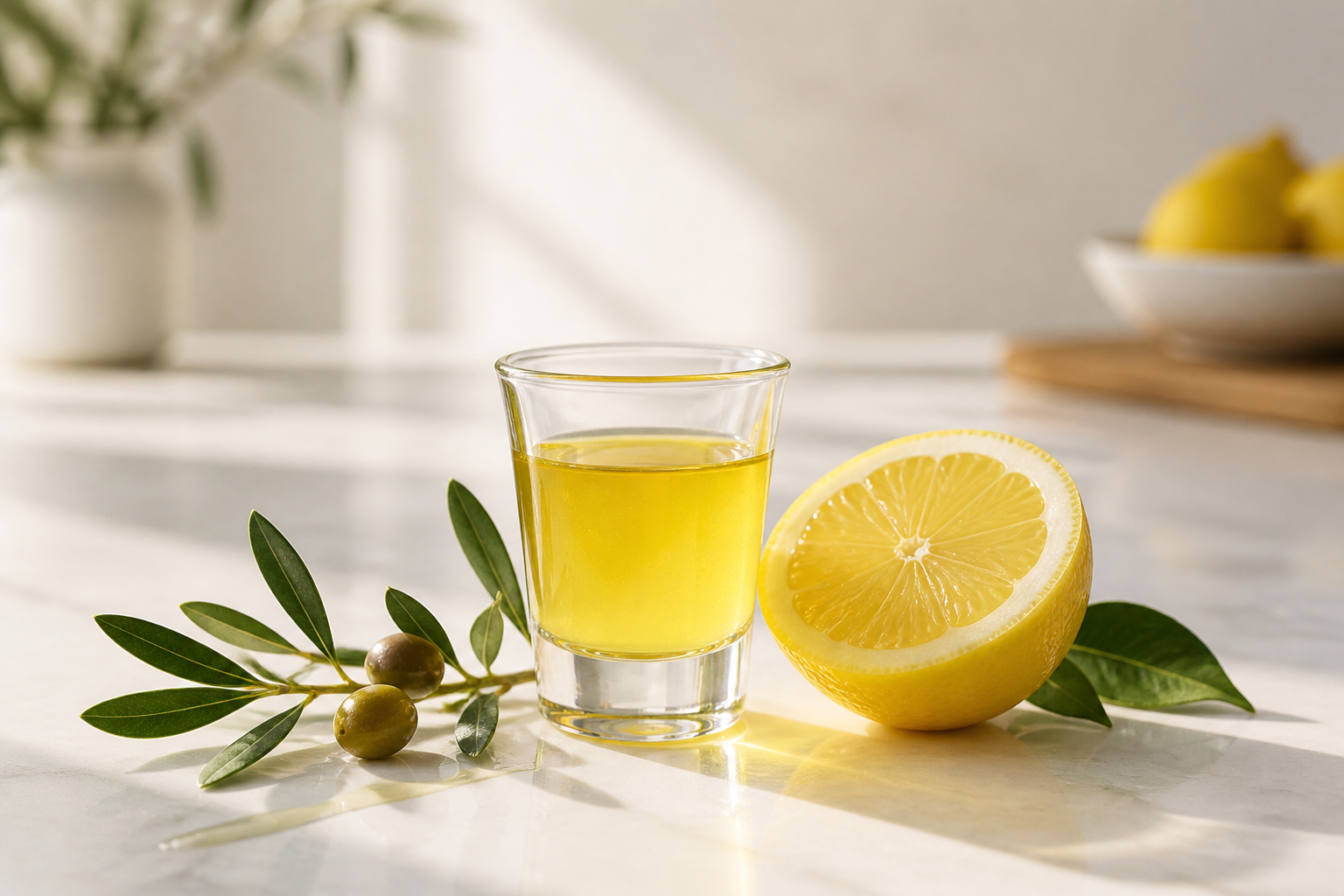
Olive oil and lemon shots have become a popular morning wellness ritual on social media. They are often promoted as a way to “jump-start” digestion or support detox. But viral trends are not the same as evidence-based nutrition advice. The available research suggests that both ingredients can be part of a healthy diet, while this specific shot is far less special than it is sometimes made to sound [1][2][3].
What this shot is and why it went viral
At its simplest, the drink is just olive oil mixed with lemon juice and taken on an empty stomach. It fits neatly into the world of viral detox drinks: easy, simple, and highly shareable. Still, popularity online does not make something a general nutrition recommendation.
It also helps to separate how something feels from what it does biologically. The body already has systems that process and eliminate waste substances, which is why detoxes and cleanses have limited clinical evidence and are not convincingly proven to remove toxins [1].
What each ingredient can offer on its own
Olive oil can fit into a healthy eating pattern because it provides unsaturated fats, which are generally considered a better choice within the overall diet [2]. That does not mean taking it as a shot has special advantages compared with using it in balanced meals.
Lemon, meanwhile, provides vitamin C and can add flavor and freshness to drinks or meals [3]. Its nutritional value is real, but it does not turn lemon into a detox remedy or a complete digestive fix.
Does taking olive oil on an empty stomach help?
There is no universal rule that makes olive oil on an empty stomach better for everyone. Some people say it helps them feel fuller or gives them a smoother digestive experience, but that depends a lot on the individual.
In fact, high-fat foods can contribute to indigestion in some people [4]. That helps explain why an olive oil shot may feel fine for one person and heavy for another. It may also be a poor fit for people who are sensitive to digestive discomfort or who prefer a lighter start to the day.
Does lemon on an empty stomach help digestion or detox?
Lemon can make water or another drink more palatable, which is a practical benefit. But that is very different from a proven detox effect. The idea that lemon “cleanses” the body is more of a wellness story than a scientific conclusion [1][3].
Lemon is also acidic. For people prone to heartburn or reflux, acidic foods and drinks can worsen symptoms [5]. So what feels harmless to one person may be uncomfortable to another.
Olive oil and lemon for digestion: what can happen
Digestive responses are not the same for everyone. This shot may be:
- Neutral for some people.
- Heavy if the oil is taken when the stomach is sensitive.
- Uncomfortable if there is a tendency toward reflux or heartburn.
- Unnecessary if breakfast is already balanced.
In short, there is no one-size-fits-all effect. The mix of fat and acidity may be tolerable for some people and bothersome for others [4][5]. That is why it should not be framed as a simple home remedy for digestion.
Common myths about viral detox drinks
The biggest claims on social media are often the weakest: that a drink removes toxins, speeds internal cleansing, or replaces healthy habits. The NCCIH notes that detoxes and cleanses have limited clinical evidence, and that many commercial claims are not well supported [1].
That does not mean every morning habit is pointless. It means expectations should stay realistic. A shot cannot replace sleep, daily hydration, a varied diet, or a complete breakfast when one is needed.
What nutritionists generally think about these morning shots
The evidence-based nutrition view is fairly cautious: if someone likes this habit and it does not cause discomfort, it may fit occasionally into a routine. But it should not be sold as a miracle or as a shortcut to health.
The most useful advice is still the simplest one: focus on sustainable habits. That means eating enough, staying hydrated, and building a morning routine that truly supports energy and digestion instead of relying on a viral drink to do all the work.
How to build a more practical morning routine
If you want something more substantial than a single shot, think about the whole day instead of the first few minutes of the morning. Practical ideas include:
- Having a balanced breakfast if you need one.
- Drinking water based on your thirst and routine.
- Choosing foods that sit well and keep you satisfied.
- Paying attention to how your digestion reacts to fats or acidic foods.
If you have reflux, sensitive digestion, or frequent discomfort, it is a good idea to talk with a health professional about habits that fit your needs.
Bottom line
The olive oil and lemon shot is a catchy trend, but its real value is more modest than social media suggests. Olive oil and lemon can both belong in a healthy diet, but there is no convincing evidence to present them as a detox solution. If you enjoy it, keep expectations realistic. If it bothers your digestion, you do not need to make it part of your routine [1][2][3][4][5].
Sources consulted
- “Detoxes” and “Cleanses”: What You Need To Know — National Center for Complementary and Integrative Health (NCCIH), NIH — https://www.nccih.nih.gov/health/detoxes-and-cleanses-what-you-need-to-know?matchtype=e
- Healthy Cooking Oils — American Heart Association — https://www.heart.org/en/healthy-living/healthy-eating/eat-smart/fats/healthy-cooking-oils/
- Vitamin C — MedlinePlus, U.S. National Library of Medicine — https://medlineplus.gov/vitaminc.html
- Indigestion | Dyspepsia — MedlinePlus, U.S. National Library of Medicine — https://medlineplus.gov/indigestion.html
- Heartburn: MedlinePlus Medical Encyclopedia — MedlinePlus, U.S. National Library of Medicine — https://www.medlineplus.gov/ency/article/003114.htm