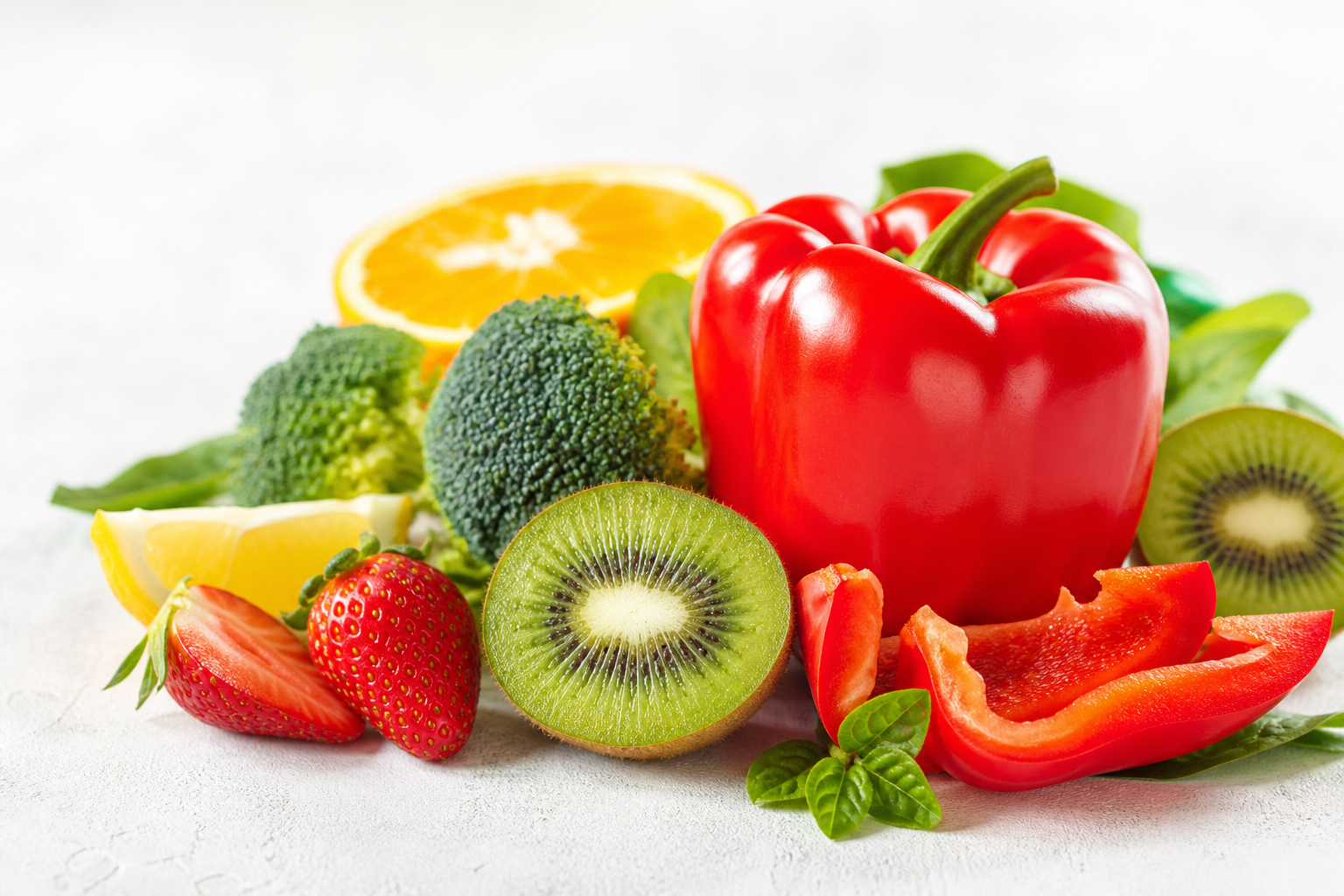
Why it helps to look beyond oranges
Oranges are often the first food people think of when they hear "vitamin C." But they are far from the only option, and not always the strongest one. Fruits and vegetables are the main natural sources of this nutrient, and some provide very high amounts per serving [1].
Vitamin C supports general body functions, acts as an antioxidant, and contributes to skin and connective tissue health. It also plays a role in iron absorption and overall well-being [3].
Which foods can offer more vitamin C than an orange
If your goal is to increase natural vitamin C intake, it helps to widen your list. Among everyday foods, some fruits and vegetables stand out for their vitamin C density, including kiwi and raw red bell pepper [1][2].
In fact, a small serving of raw red bell pepper can provide more vitamin C than a medium orange [2]. That is a useful reminder that citrus fruit is only one part of the picture.
Fruits rich in vitamin C
Among fruits with more vitamin C, kiwi is a very easy option for breakfasts and snacks [1]. Other fresh fruits can also fit naturally into a balanced routine.
Simple ways to use them:
- Add kiwi to yogurt or a fruit bowl.
- Eat a fresh fruit as a mid-morning snack.
- Prepare a quick sliced-fruit snack.
- Mix several fruits and vegetables with vitamin C in one meal.
Vegetables with vitamin C
Vegetables with vitamin C deserve more attention because they can add a lot without changing your menu too much. Raw red bell pepper is one of the clearest examples [2]. Other vegetables can also contribute meaningfully, especially when eaten raw or lightly cooked [4].
A practical approach is to think of vitamin C as something you can spread across the day, not something that needs to come from one single meal.
Benefits of including more natural vitamin C
Vitamin C is useful as part of an overall balanced diet, not as a stand-alone fix. Its best-known roles include supporting immunity and acting as an antioxidant [3]. It also contributes to tissue formation and maintenance, including the skin [3].
That does not mean one food does everything. It means that increasing natural sources of vitamin C can be a simple way to strengthen the overall quality of your diet.
How to increase vitamin C in daily life
You do not need to redesign your whole menu. Small, sustainable changes often work best.
Try these ideas:
- Start the day with a vitamin C-rich fruit.
- Add a raw vegetable to your main meal.
- Keep vitamin C-rich snacks, such as fresh fruit, within reach.
- Rotate different fruits and vegetables with vitamin C to avoid monotony.
- Mix foods simply across breakfast, snacks, and dinner.
Common mistakes when trying to get more vitamin C
One of the most common mistakes is assuming only citrus fruits matter. Another is forgetting that cooking, long storage, and exposure over time can reduce vitamin C content in foods [1][4].
If you want to get more out of this nutrient, it often helps to prioritize fresh options and simple preparation methods. The goal is not to eat everything raw, but to be mindful of how foods are bought, stored, and cooked.
Practical everyday combinations
A few easy combinations can help you add more vitamin C without overhauling your routine:
- Breakfast: fresh fruit with oatmeal or yogurt.
- Mid-morning: kiwi or another seasonal fruit.
- Lunch: a salad with raw vegetables.
- Snack: sliced fruit for a quick bite.
- Dinner: serve lightly cooked vegetables with the main dish.
If you have questions about adapting your diet to specific needs, it is always wise to consult a health professional.
Bottom line
Looking for foods with more vitamin C than an orange is a simple way to expand your food choices. Between fruits, vegetables, and everyday preparation habits, there are many accessible ways to increase daily vitamin C without making things complicated [1][2][4].
Consistency matters most: choosing fresh foods, varying your sources, and giving both fruits and vegetables a place in your meals can make a real difference over time.
Sources consulted
- [1] Vitamin C - Consumer, NIH Office of Dietary Supplements, https://ods.od.nih.gov/factsheets/VitaminC-Consumer/
- [2] Vitamin C - Health Professional Fact Sheet, NIH Office of Dietary Supplements, https://ods.od.nih.gov/factsheets/VitaminC-HealthProfessional/
- [3] Vitamin C, MedlinePlus, https://medlineplus.gov/vitaminc.html
- [4] Vitamin C: MedlinePlus Medical Encyclopedia, MedlinePlus, https://medlineplus.gov/ency/article/002404.htm