Introduction: how food can influence mood
The link between food and mental health is not about one perfect meal or a magic ingredient list. Still, a balanced diet can be part of everyday self-care and help support energy, fullness, and overall well-being [2]. In other words, food does not replace professional care, but it can support a steadier and more manageable routine.
When people search for foods for depression or wonder what to eat when mood feels low, it helps to focus on what is realistic: regular meals, variety, hydration, and fresh seasonal foods [1][3]. That approach fits spring and summer especially well, when fruits and vegetables are often lighter, colorful, and easy to use in simple meals.
Nutrients often linked with a better mood
There is no single nutrient that explains how you feel, but several often come up in conversations about nutrients for mood. These include folate, fiber, magnesium, and omega-3s, within an overall varied diet.
Why do they matter? Because the brain, like the rest of the body, needs energy and nutrients to function well. A healthy diet may also help reduce long gaps between meals and the ups and downs that can come with very limited or repetitive eating [1][3].
A systematic review and meta-analysis found that healthier dietary patterns were associated, in observational studies, with lower odds of depression, although that does not prove a direct cause-and-effect relationship [5]. Put simply: eating well is not a cure, but it can be part of habits that support well-being.
Fresh spring and summer foods worth prioritizing
If you are looking for healthy spring foods or healthy summer foods, start with seasonal fruits and vegetables. MedlinePlus notes that good nutrition includes variety, fruits, vegetables, fiber, and water [1]. That gives you a practical framework without turning meals into a strict plan.
Useful foods to prioritize include:
- Fresh seasonal fruit: easy for snacks, breakfasts, and hydration-friendly meals.
- Leafy greens: often a good source of folate and easy to add to salads or bowls.
- Fiber-rich vegetables: help add volume and make meals more satisfying.
- Legumes and whole grains: work well in balanced, filling dishes.
- Healthy fats and protein sources: help round out a meal and support steadier energy.
The goal is not to find a “perfect” food. It is to build simple, repeatable meals. That kind of consistency is usually easier to keep than a strict diet [1].
How to build meals that support emotional well-being
A practical way to think about meals is to combine:
- vegetables
- protein
- whole-grain carbohydrates
- healthy fats
That structure helps create more complete meals and may make it easier to keep energy levels more even through the day [1][3].
Easy examples
- Breakfast: plain yogurt or a similar option with seasonal fruit and oats.
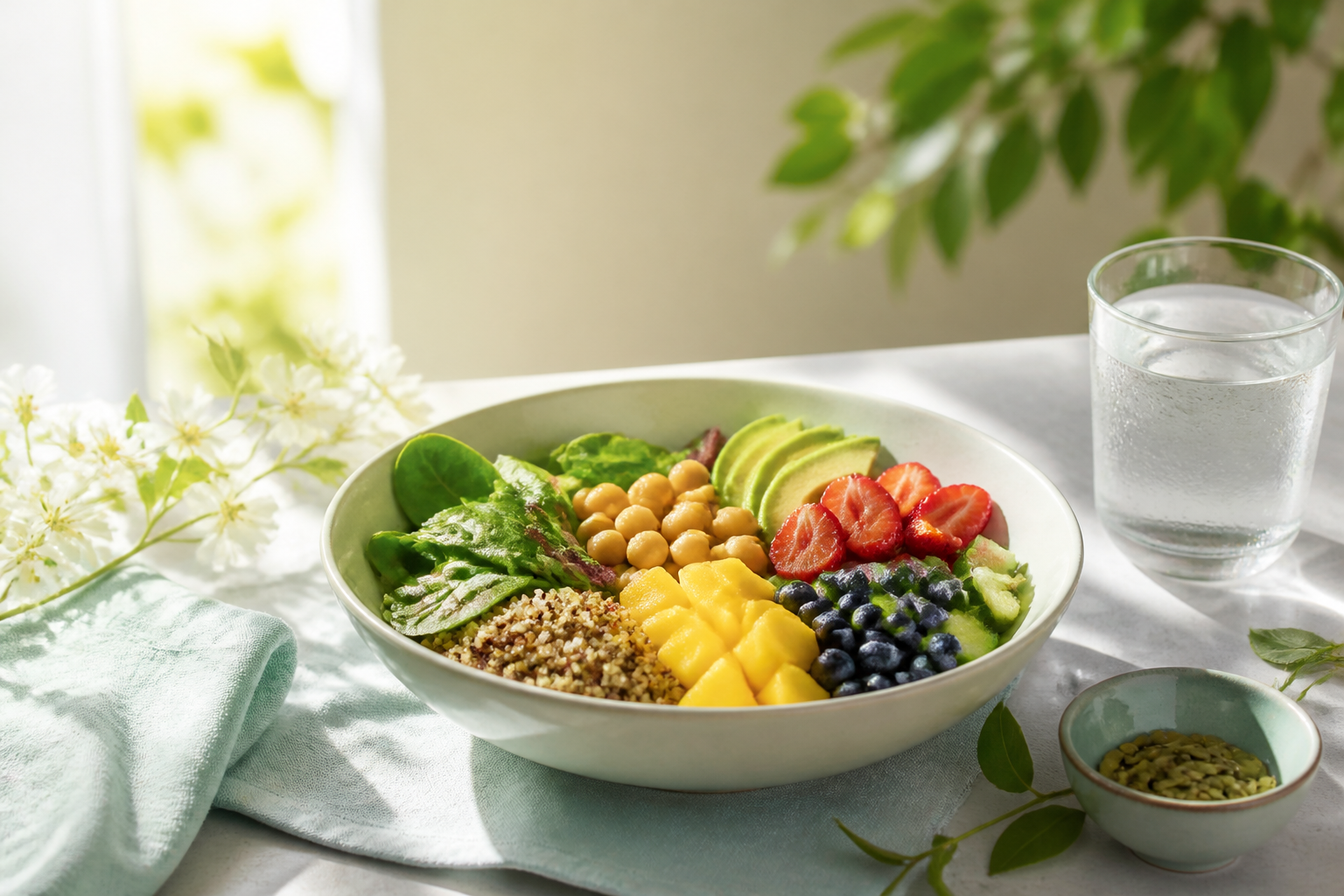
- Lunch: a salad or bowl with greens, legumes, whole grains, and a healthy fat.
- Dinner: a lighter plate with vegetables, protein, and a whole-grain side.
- When appetite is low: fresh fruit, chilled soups, or smaller meals spread through the day.
In hot weather, simpler meals often feel better. Cold or room-temperature dishes with fresh ingredients can be easier to enjoy and easier to repeat.
Eating habits that may help during emotional lows
Sometimes the issue is not only what you eat, but how you structure the day. The NIMH recommends self-care routines that include paying attention to what you eat and drink regularly [3].
Habits that may help:
- keep meal times as consistent as possible;
- avoid going too long without eating;
- drink water regularly, especially during warmer months [4];
- choose simple, complete meals instead of skipping meals;
- lower the pressure when energy is low.
The CDC notes that dehydration can affect how you feel and how clearly you think, which is why hydration deserves extra attention in spring and summer [4]. Sometimes something as basic as drinking enough water can make the day feel more manageable.
Healthy spring and summer recipe ideas
Eating better does not have to mean cooking complicated recipes. These ideas fit an overall balanced approach and make good use of fresh seasonal foods:
- greens, fresh fruit, and legumes in a salad;
- a grain bowl with vegetables, protein, and a healthy fat;
- a chilled soup or light vegetable cream;
- whole-grain toast with fruit and a protein side;
- soft roasted vegetables with legumes and whole grains.
The key is repeatability. If a meal feels easy, you are more likely to use it again during the week.
Warning signs and when to seek professional help
Even though food can support well-being, it does not replace mental health care. If low mood, sadness, or loss of interest lasts for weeks, affects daily life, or makes it harder to sleep, work, or connect with others, it is a good idea to speak with a health professional.
It is also worth getting support if eating becomes highly irregular, if fatigue feels persistent, or if daily self-care starts to slip. An overall care plan is often more helpful than trying to fix everything through diet alone.
Final thoughts
Choosing foods for depression does not mean following a strict diet or looking for quick fixes. It means returning to the basics: variety, real food, regular meals, hydration, and fresh dishes you can sustain over time [1][3][4]. With that foundation, spring and summer can be a helpful season for building habits that support mood.
Sources consulted
- [1] Nutrition — MedlinePlus — https://medlineplus.gov/nutrition.html
- [2] How to Improve Mental Health — MedlinePlus — https://medlineplus.gov/howtoimprovementalhealth.html
- [3] Caring for Your Mental Health — National Institute of Mental Health (NIMH) — https://www.nimh.nih.gov/health/topics/caring-for-your-mental-health
- [4] About Water and Healthier Drinks — Centers for Disease Control and Prevention (CDC) — https://www.cdc.gov/healthy-weight-growth/water-healthy-drinks/
- [5] A systematic review and meta-analysis of dietary patterns and depression in community-dwelling adults — PubMed — https://pubmed.ncbi.nlm.nih.gov/24196402/