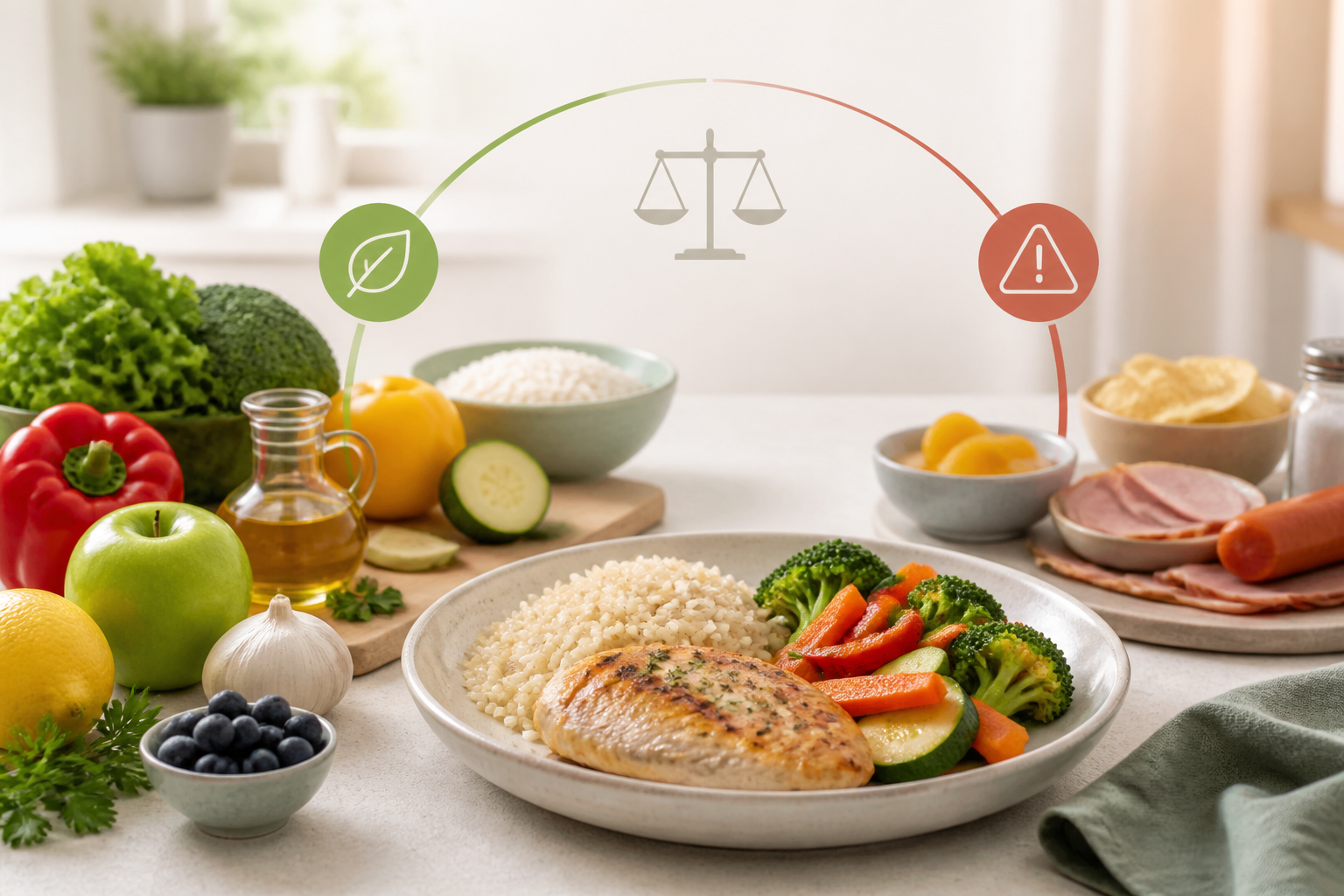
What to limit when you have C3G or IC-MPGN
If you live with C3G or IC-MPGN, food does not replace medical care, but it can support kidney health and help manage nutrients that are often watched in chronic kidney disease: sodium, phosphorus, and potassium [1]. Not everyone needs the same limits, so the goal is not a rigid list of banned foods. It is learning how to choose better, day by day.
In practice, the idea is simple: reduce the foods that create the most burden for the kidneys and choose fresher, less processed options whenever possible. That includes paying attention to foods to avoid with C3G not as an absolute rule, but because they often contain too much sodium, phosphorus, or potassium for some people with kidney disease [1][3].
Why these nutrients matter
Sodium can contribute to fluid retention and make blood pressure harder to manage, both of which matter for kidney health [1][2]. Phosphorus can build up when kidney function declines, so it is worth checking both naturally occurring phosphorus and the phosphorus added to processed foods [4]. Potassium does not need to be restricted the same way for everyone; it depends on lab results and clinical advice [1][3].
In other words, the goal is not to remove entire food groups without guidance. It is to understand what is worth limiting and in what amounts.
Foods high in sodium that are often worth limiting
Foods high in sodium are usually the first place to look. Common examples include:
- Processed meats
- Salted canned foods
- Salty snacks
- Instant soups
- Ready-made or heat-and-eat meals
These foods can pack a lot of sodium into a small serving, which makes it easy to get more than expected [2][3]. Sodium can also hide in foods that do not taste especially salty, so labels matter more than taste alone.
A practical step is to compare similar products and choose the one with less sodium per serving. In the ingredient list, a shorter list and fewer highly processed seasonings often make the product easier to evaluate [5].
Where phosphorus can show up in everyday eating
Phosphorus occurs naturally in many foods, but phosphorus added to processed foods is also important in kidney disease. Natural phosphorus is not the same as phosphorus additives, which may be absorbed more easily [4].
That is why it helps to pay attention to:
- Dairy foods
- Ultra-processed foods
- Products with phosphate additives
- Foods that combine multiple layers of processing
The practical advice is not to fear food, but to check the label. If an ingredient includes “PHOS” in the name, it may signal a phosphate additive [4][5]. In a low phosphorus diet, that label check can matter as much as the nutrition facts panel.
When potassium needs closer attention
Potassium may need more attention in some stages of kidney disease, but it is not restricted in the same way for everyone [1][3]. Before cutting back on fruits, vegetables, or other potassium-rich foods, the most useful step is to follow the guidance of the care team.
In general, the better strategy is often to adjust portions and frequency rather than removing fresh foods all at once. That fits a kidney disease diet that aims for balance instead of extremes.
What to eat with glomerulonephritis for a steadier routine
If you are wondering what to eat with glomerulonephritis, a good place to start is with simple, fresher, less packaged foods and less hidden sodium [1][3]. That can include home-cooked meals, fruits and vegetables as individually advised, and carefully chosen grains and protein foods.
A practical plate usually looks like this:
- Fewer ultra-processed items
- More home preparation when possible
- Moderate portions
- Regular review of sodium, phosphorus, and potassium based on lab results
This approach also supports a low sodium diet for kidney health without unnecessary restrictions.
Common mistakes when trying a renal diet
Three mistakes come up often:
- Removing foods without professional guidance. What works for one person may not work for another [1][3].
- Trusting the words “low sodium” alone. A food may be lower in sodium and still not be ideal for other reasons [5].
- Using salt substitutes with potassium without checking if they are appropriate. The NIDDK guidance recommends caution because these products can add potassium [2].
Avoiding these mistakes can make a renal diet more realistic and sustainable.
How to read labels without making it complicated
Label reading is one of the most useful tools for a low phosphorus diet and a low potassium diet when those limits are needed. Focus on:
- Sodium per serving
- The ingredient list
- Words that include “PHOS”
- Whether a low sodium product uses potassium chloride [5]
You do not need to memorize everything. Just check two things every time: how much sodium the food has and whether the ingredients suggest added phosphorus or potassium-based salt replacement.
When to ask for professional help
If you are unsure about foods to avoid with IC-MPGN or how to adjust your eating pattern for kidney disease, talking with a health professional or renal dietitian can help. That is especially useful if your lab results change, if you have been given different instructions about phosphorus or potassium, or if you want to make your diet more practical without over-restricting it.
Final takeaway
With C3G or IC-MPGN, eating better does not mean eating in fear. It means learning to spot processed foods, sodium sources, added phosphorus, and products that may bring in extra potassium when that is not ideal. With clear information and professional guidance, daily choices become much easier to manage.
Sources consulted
[1] Healthy Eating for Adults with Chronic Kidney Disease — NIDDK — https://www.niddk.nih.gov/health-information/kidney-disease/chronic-kidney-disease-ckd/healthy-eating-adults-chronic-kidney-disease
[2] Slow Progression & Reduce Complications — NIDDK — https://www.niddk.nih.gov/health-information/professionals/clinical-tools-patient-management/kidney-disease/identify-manage-patients/manage-ckd/slow-progression-reduce-complications
[3] Nutrition and Kidney Disease, Stages 1-5 (Not on Dialysis) — National Kidney Foundation — https://www.kidney.org/kidney-topics/nutrition-and-kidney-disease-stages-1-5-not-dialysis
[4] Phosphorus and Your Diet - Levels, diet, deficiency — National Kidney Foundation — https://www.kidney.org/kidney-topics/phosphorus-and-your-ckd-diet
[5] Your Guide to the New and Improved Nutrition Facts Label — National Kidney Foundation — https://www.kidney.org/kidney-topics/your-guide-to-new-and-improved-nutrition-facts-label?page=2