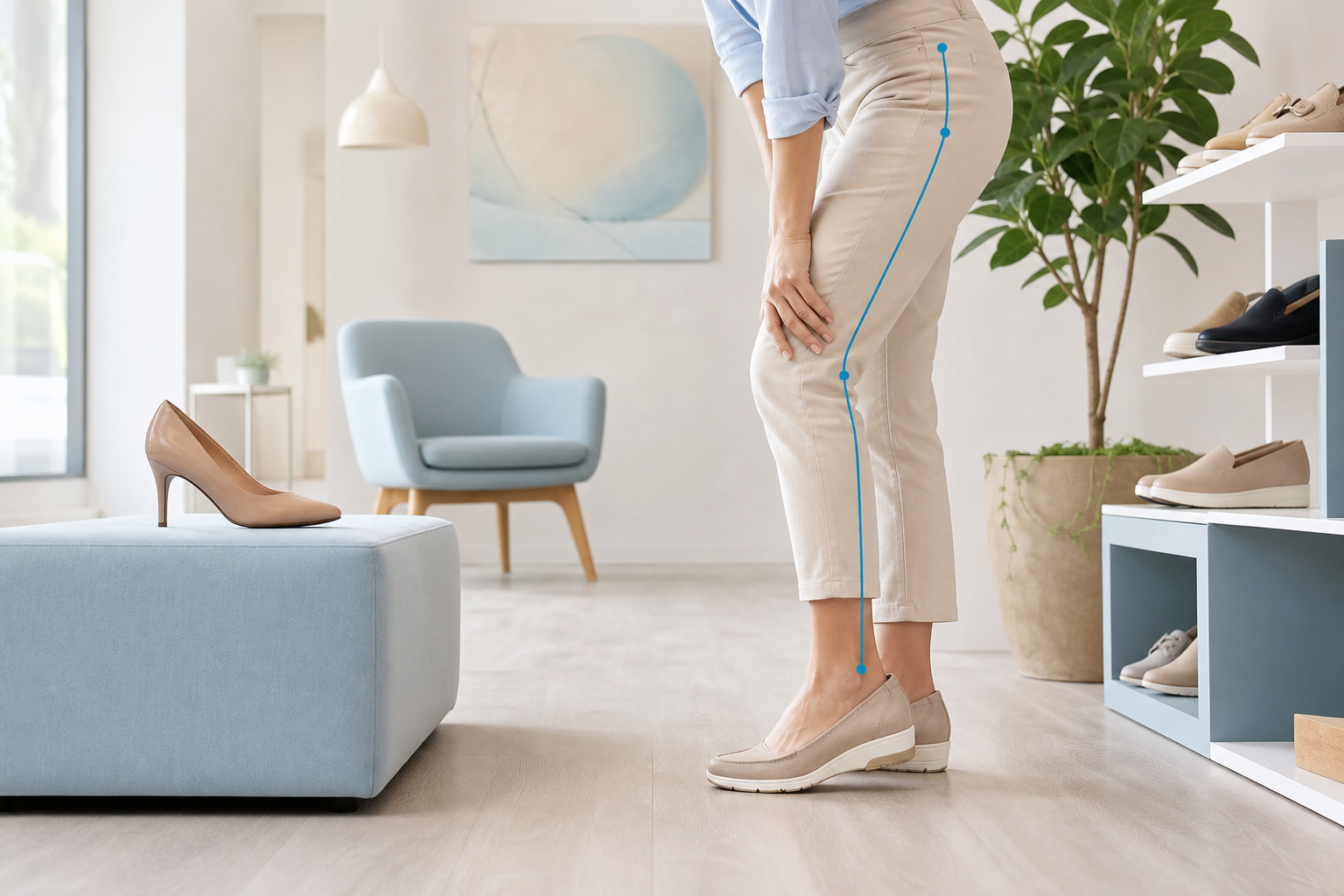
Can shoes influence back pain?
Yes, they can. The way your foot lands affects posture, balance, and how weight is distributed while you walk. When footwear does not support that movement well, the back may feel more strain. MedlinePlus notes that good posture and comfortable, low-heeled shoes are part of maintaining better body alignment [1].
That does not mean shoes are the only reason for low back pain. But they can add comfort or discomfort to everyday movement. That is why, when looking for shoes for back pain, it helps to focus on stability, support, and fit, not just softness.
What to look for in shoes for back pain
A useful starting point is to think about how the shoe feels on the foot and how your body feels while walking. The American Podiatric Medical Association highlights general footwear features such as support, stability, suitable flexibility, impact absorption, and proper fit [3][4].
1. Arch support and a stable base
Arch support can help the foot move with more control. It also helps when the shoe has a stable base, especially if you spend a lot of time on your feet. A balanced platform can make walking feel more comfortable.
2. Balanced cushioning
Cushioning matters, but more is not always better. A shoe that is too soft may feel pleasant at first and then feel unstable. The goal is balance: cushioned footwear that helps soften impact without losing firmness.
3. Grip and traction
The outsole matters too. Good traction gives you a steadier feel with each step and can reduce the sense of wobble. For many people with low back pain, that extra sense of control can improve daily comfort.
4. A proper fit
A good fit helps prevent the foot from sliding or overcompensating inside the shoe. That supports a more natural walking pattern. Look for enough room in the toe box and secure but non-tight hold. If a shoe needs a lot of breaking in to feel acceptable, it may not be the best choice.
What shoes to avoid if you have low back pain
There is no single shoe that is wrong for everyone, but certain features often make comfort harder. Posture and heel height can affect body alignment, and MedlinePlus notes that high heels can change balance and posture [1].
Try to avoid these features when possible:
- Shoes with little support or excessive flexibility.
- Outsoles that are heavily worn or feel unstable.
- Styles that pinch, rub, or change your natural walking pattern.
- Designs with too much height or an unstable platform.
In other words, the worst shoes for the back are often not the most stylish ones, but the ones that force your body to compensate. Shoes with poor stability or shoes without support can make walking feel less relaxed and more tiring.
How to choose comfortable shoes for walking or daily wear
A good choice is not only about appearance. It also depends on when and how you test the shoe.
Try shoes later in the day
Feet are often a bit more expanded later in the day. Trying shoes then gives you a more realistic fit check. If you plan to wear them for work, errands, or long walks, take a few minutes to walk in them before deciding.
Check the toe box
There should be enough room to move your toes. A narrow toe box can change the way you load your foot and may feel uncomfortable over time.
Think about real use
Buying shoes for an office day is not the same as buying for city walking or hours of standing. Podiatrist-recommended shoes usually share one idea: the best shoe depends on the foot and on how it will be used [3][4].
Why support, posture, and weight distribution matter
When the foot moves with more stability, the body may distribute weight more efficiently. That does not remove back pain on its own, but it can reduce one source of daily strain. NINDS notes that with low back pain, it is often helpful to maintain movement-friendly habits and pay attention to posture in daily life [2].
That is why shoes to prevent back pain are not just the ones that feel soft. They are the ones that help you keep a more natural walking pattern. The right footwear can complement other posture habits and make movement feel easier.
When to consider insoles or professional advice
In some cases, insoles may be useful, but they do not replace an individual assessment. Foot shape, the amount of support you need, and your daily routine all affect the final choice. If discomfort keeps coming back, if one side of your body feels more loaded than the other, or if no shoe feels truly comfortable, it may be worth speaking with a podiatrist or other health professional.
It also makes sense to ask for guidance if you are unsure about support, fit, or shoe wear patterns. Sometimes small changes in everyday footwear make a bigger difference than expected.
The bottom line
If you have back pain, it is worth taking a closer look at your shoes. Choose shoes for back pain with support, stability, balanced cushioning, and a proper fit. Avoid styles that throw off alignment, feel unstable, or make you compensate while walking.
The best choice is usually not the softest or the flashiest one. It is the one that supports your posture and your walking pattern well. And if needed, professional guidance can help you choose with more confidence.
Sources consulted
- Guide to Good Posture — MedlinePlus — https://medlineplus.gov/guidetogoodposture.html
- Low Back Pain — National Institute of Neurological Disorders and Stroke (NINDS) — https://www.ninds.nih.gov/sites/default/files/migrate-documents/low_back_pain_20-ns-5161_march_2020_508c.pdf
- Which Running Shoe is Right for You? — American Podiatric Medical Association — https://www.apma.org/patients-and-the-public/tips-for-healthy-feet/which-running-shoe-is-right-for-you/
- Choosing Shoes for Sports — American Podiatric Medical Association — https://www.apma.org/patients-and-the-public/tips-for-healthy-feet/choosing-shoes-for-sports/