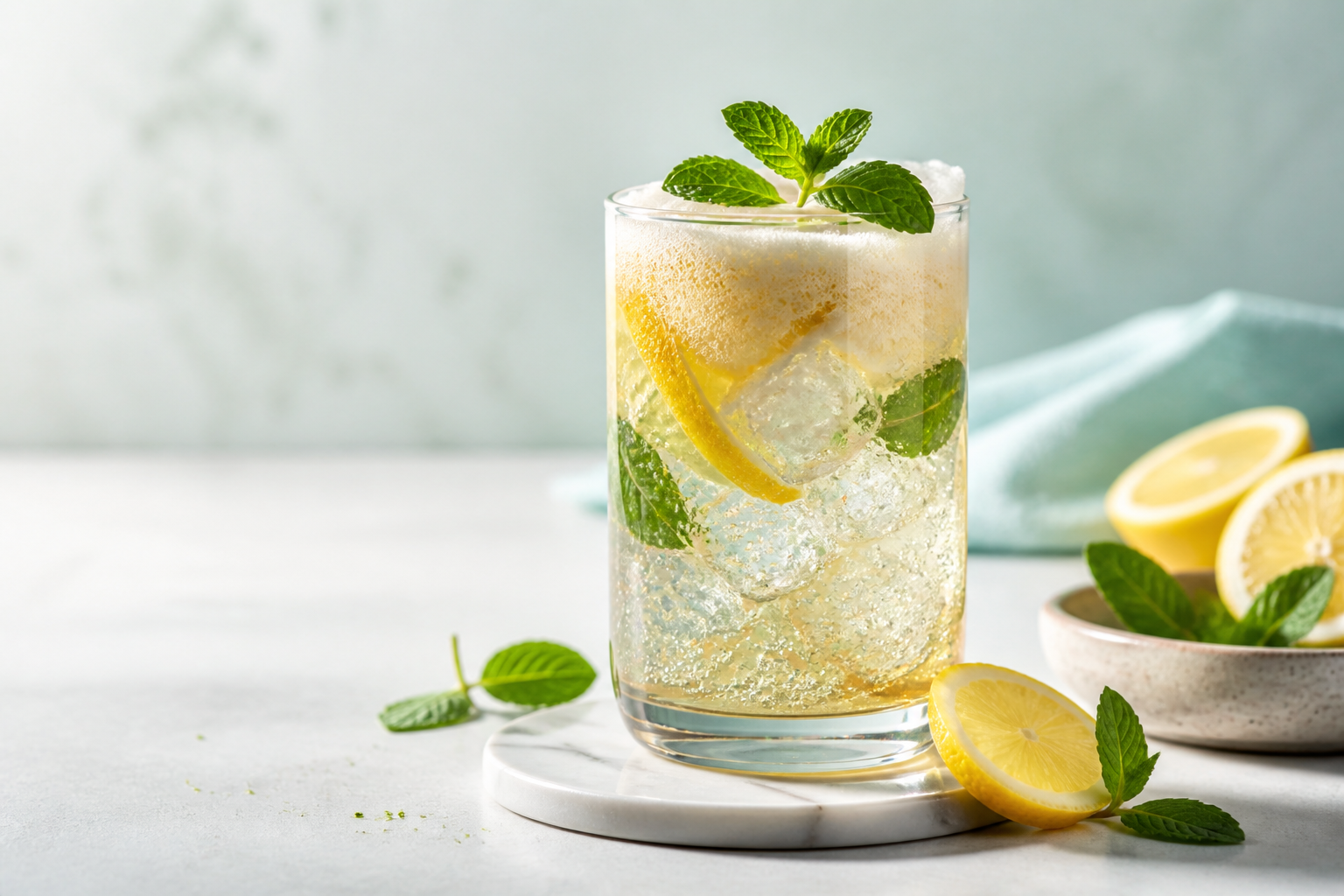
What a dirty soda is and why it became so popular
A dirty soda is, in general, a soda-based drink with extra add-ins for more flavor, sweetness, or creaminess. Its appeal comes from being familiar, customizable, and fun. But that same mix can also make a simple drink much higher in sugar and calories than it looks.
Sweetened beverages can contribute a large share of added sugar in the diet and may raise total calorie intake without offering much nutritional value [1][2][4]. So if your goal is a healthier dirty soda, the best approach is not to make it more complicated, but to make it lighter.
What makes the traditional version heavier
The difference usually comes down to three things: the base, the sweet add-ins, and the serving size. When a drink starts with a sugary soda and then gets more sweet or creamy additions, the sugar and calorie count can rise quickly [1][2][4].
Portion size matters too. A homemade drink can seem light at first, but if several sweet elements are added at once, it stops feeling like a refreshing drink and starts looking more like a liquid dessert.
How to make a lighter version at home
The most practical way to build a healthier soda recipe is to start with a lighter base and keep the overall balance in mind. The FDA recommends using the Nutrition Facts label to compare added sugars and calories in packaged drinks [3]. That same idea can guide your choice of a lower-sugar or no-added-sugar base.
From there, keep only what you need to make the drink enjoyable:
- Choose a base with less sugar or no added sugar when possible.
- Keep sweet add-ins in check so flavor does not turn into overload.
- Serve it cold so it still feels refreshing.
- Favor simple combinations instead of piling on too many elements.
Helpful swaps to cut sugar and calories
If you want a lower-calorie beverage, the key is to shift the focus: less sweetness, more balance. MedlinePlus notes that one general way to lighten sweetened drinks is to choose unsweetened versions or flavor water or sparkling water with fruit or herbs [1].
That does not mean the drink has to be boring. It means you can build flavor in a lighter way. Practical ideas include:
- Replacing part of the sweetness with a less sugary base.
- Reducing the add-ins that contribute the most sugar.
- Using flavor more subtly so the drink still tastes good.
- Thinking about freshness first, not just sweetness.
The American Heart Association also points out that added sugars contribute calories with little nutritional value [4]. That helps explain why even a small change can make a noticeable difference.
Proportions that keep it refreshing
A lighter drink does not need a long ingredient list; it needs good proportions. If everything is sweet, the result feels heavy. If everything is too sharp or too diluted, it loses appeal. The sweet spot is usually a balance of bubbles, sweetness, and freshness.
Try these simple guidelines:
- Start with less add-in than you would use in a traditional version.
- Taste before adding more sweetness.
- Aim for a texture that feels light and easy to drink.
- If the drink already has enough flavor, do not add more just out of habit.
This approach helps you create a lower-calorie drink that still feels enjoyable without going overboard.
Easy homemade variations
There is no need for a rigid formula. In fact, the best healthier drinks are often the simplest. You can think in three directions:
- A very light version with soda as the base and little else.
- A version with a hint of fruit for flavor without overload.
- A version with less sweetness and a fresher finish.
The goal is to adapt the drink to your taste while keeping balance in mind. If you are looking for a healthy soda recipe, the answer is usually this: a light base, a moderate amount of add-ins, and a final result that does not rely on excess sugar to work.
Common mistakes when trying to make it healthier
One of the most common mistakes is assuming that "lighter" means changing just one ingredient. In reality, if several sweet elements are used together, the drink can still be high in sugar and calories.
Other common missteps include:
- Adding too much sweetness to compensate for a simple base.
- Using too many ingredients and losing balance.
- Skipping the Nutrition Facts label when choosing a packaged base [3].
- Turning a refreshing drink into something too dense.
The goal is not perfection; it is a more balanced drink that is easy to enjoy again.
How to adapt it to your taste without overcomplicating it
The best alternative to soda is the one you actually want to drink. That is why it helps to test small changes and keep the version that fits your taste best.
If you prefer less sweetness, reduce the add-ins. If you like it fresher, serve it very cold. If you want something simpler, use fewer components. Small adjustments like these can turn a viral drink into a lighter, more everyday option.
If you are unsure how these drinks fit into your overall eating pattern, a health or nutrition professional can help you look at the bigger picture. For day-to-day choices, the simplest rule is still the most useful: less added sugar, less excess, and better balance.
Sources consulted
[1] MedlinePlus — Sweetened beverages — https://www.medlineplus.gov/ency/patientinstructions/000335.htm
[2] CDC — Fast Facts: Sugar-Sweetened Beverage Consumption — https://www.cdc.gov/nutrition/php/data-research/sugar-sweetened-beverages.html
[3] FDA — Added Sugars on the Nutrition Facts Label — https://www.fda.gov/food/nutrition-facts-label/added-sugars-nutrition-facts-label
[4] American Heart Association — Added Sugars — https://www.heart.org/en/healthy-living/healthy-eating/eat-smart/sugar/added-sugars