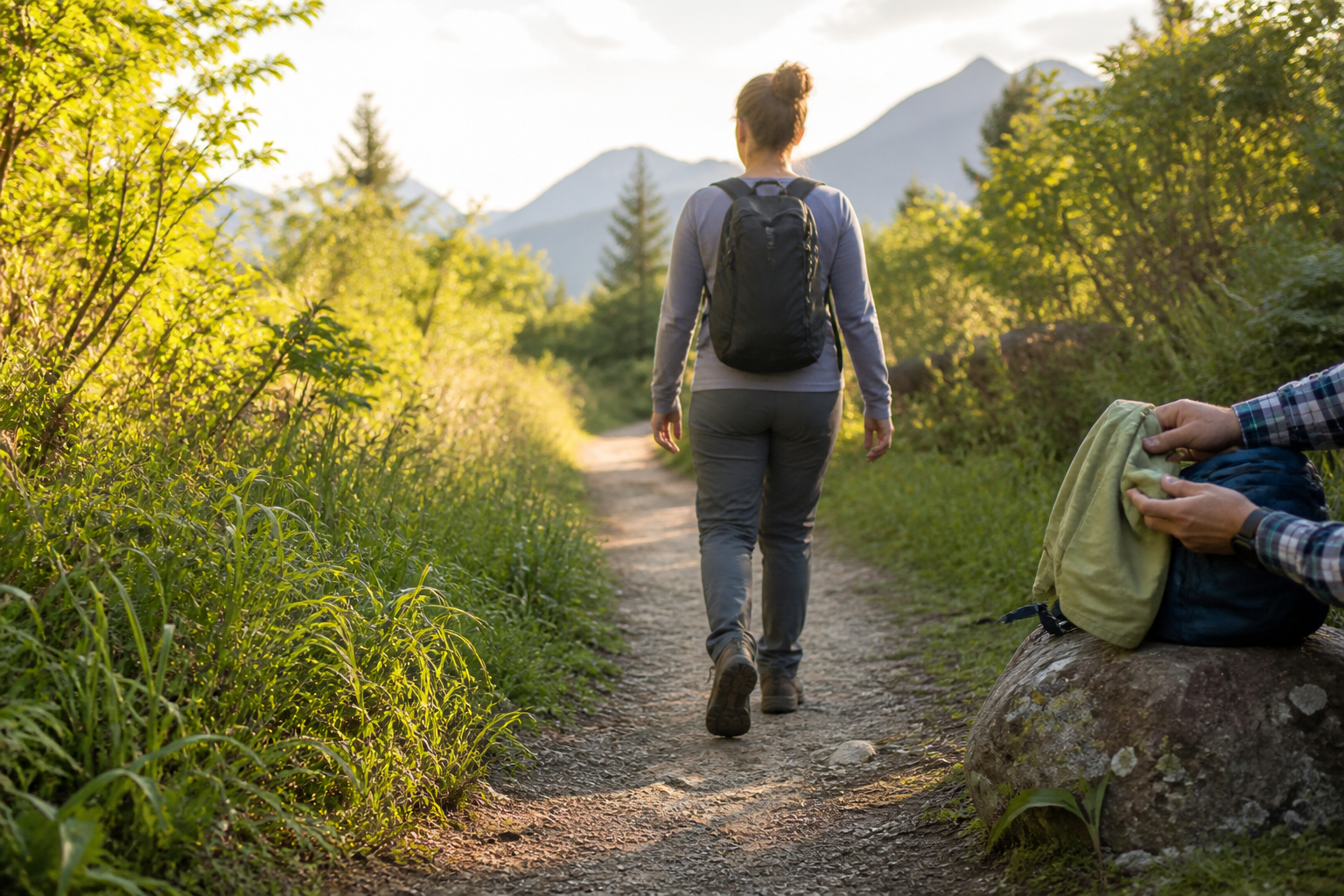
Outdoor Habits to Avoid for Fewer Tick Bites
A walk, hike, or quiet break outside should feel simple. Still, a few everyday habits can raise tick exposure without making it obvious. Public health guidance from the CDC and EPA notes that the environment matters: tall grass, brush, wooded areas, and leaf litter are places where tick contact is more likely, and returning home without checking clothing and skin can make prevention less effective [1][2].
The good news is that prevention does not have to be complicated. In most cases, the safest approach is about avoiding a few common mistakes and turning the post-outing check into an easy routine.
Why certain habits raise risk
Ticks are more likely to be found in areas with dense vegetation, including wooded spaces, brush, tall grass, and leaf litter [1][2]. That means your risk is shaped not only by how long you stay outside, but also by where you pause and how close you get to the vegetation.
The CDC recommends staying on the center of trails when possible, since that reduces contact with brush and other higher-risk areas [1]. The EPA gives similar advice: avoid brushing against tall grass and shrubs whenever you can [2].
Common mistakes worth avoiding
1. Wearing clothing that leaves too much skin exposed
Clothes that leave large areas of skin uncovered can make it easier for ticks to attach. Institutional guidance recommends covering more of the body when the setting calls for it [1][2]. The goal is not to dress awkwardly, but to reduce direct contact with vegetation.
2. Moving through dense areas without paying attention
Outdoor time does not need to be tense, but it should not be careless. Stepping into brush, walking through tall grass, or sitting near dense vegetation increases exposure [2]. A little awareness goes a long way.
3. Sitting directly on grass, leaves, or logs
A break in the woods or at the edge of a trail may seem harmless, but leaf litter and dense plant cover are common places for tick contact [1][2]. If you want to stop and rest, look for a clearer spot and check the area first.
4. Assuming only long hikes matter
You do not need a full-day trek to encounter ticks. A short walk, a park visit, or time in a wooded yard can still involve exposure if the setting is right [1][2]. The habit matters more than the distance.
5. Going home without checking clothing and skin
This is one of the easiest outdoor habits to improve. The CDC and MedlinePlus both recommend checking clothing and skin after time in grassy or wooded areas, because finding a tick early is part of basic prevention [1][3]. NIH News in Health also notes that showering after being outdoors can help make the check more thorough [4].
Simple ways to lower risk
- Choose clearer routes when you can.
- Stay away from tall grass and thick brush.
- Take breaks in open areas instead of leaf litter.
- Check clothing before getting into the car or entering the house.
- Review skin, hair, clothing, and gear after the outing [1][3][4].
These steps do not remove all risk, but they do make a real difference. The most practical tick prevention is usually the kind you can repeat without much effort.
How to prepare before you go
Prevention starts before the first step. If you know you will be walking in a vegetated area, it helps to think about the trail, the season, and how long you will be out. The CDC and EPA both support planning ahead and choosing less dense routes when possible [1][2].
It also helps to look over the area before settling in. If you are going out with family, kids, or friends, a simple shared routine can help: stay on the trail, avoid sitting in leafy or damp areas, and do a quick clothing check at the end.
What to do when you return
The check after you come home is a core part of tick safety. MedlinePlus recommends carefully inspecting clothing and skin after time in wooded or grassy areas [3]. The CDC and NIH also support washing or drying clothing after outdoor time and showering soon after returning, when possible [1][4].
A useful routine is:
- Shake out and inspect clothing.
- Check skin, hair, and common hiding spots.
- Store or wash clothes worn outdoors.
- Inspect gear that touched vegetation.
If you notice a bite or are unsure about a possible exposure, a health professional can help you decide what to do next.
The main takeaway
The goal is not to avoid the outdoors. It is to spot the outdoor habits that can increase tick exposure and replace them with safer ones. Staying on clearer paths, avoiding dense vegetation, and checking your body and clothes when you get back are simple steps that fit into almost any routine [1][2][3][4].
With a few small adjustments, you can keep enjoying outdoor activities safely and with less worry.
Sources consulted
- [1] Preventing Tick Bites — Centers for Disease Control and Prevention — https://www.cdc.gov/ticks/prevention/
- [2] Tips to Prevent Tick Bites — United States Environmental Protection Agency — https://www.epa.gov/insect-repellents/tips-prevent-tick-bites
- [3] Tick removal: MedlinePlus Medical Encyclopedia — MedlinePlus — https://medlineplus.gov/ency/article/007211.htm
- [4] Tick Talk — NIH News in Health — https://newsinhealth.nih.gov/2014/05/tick-talk