Mold in Air Conditioners: What to Know
Mold in air conditioners often develops when moisture, condensation, or dust build up inside parts of the system that stay damp. The EPA and NIEHS both note that mold grows more easily in humid indoor environments, and that moisture control is a key part of prevention [1][3].
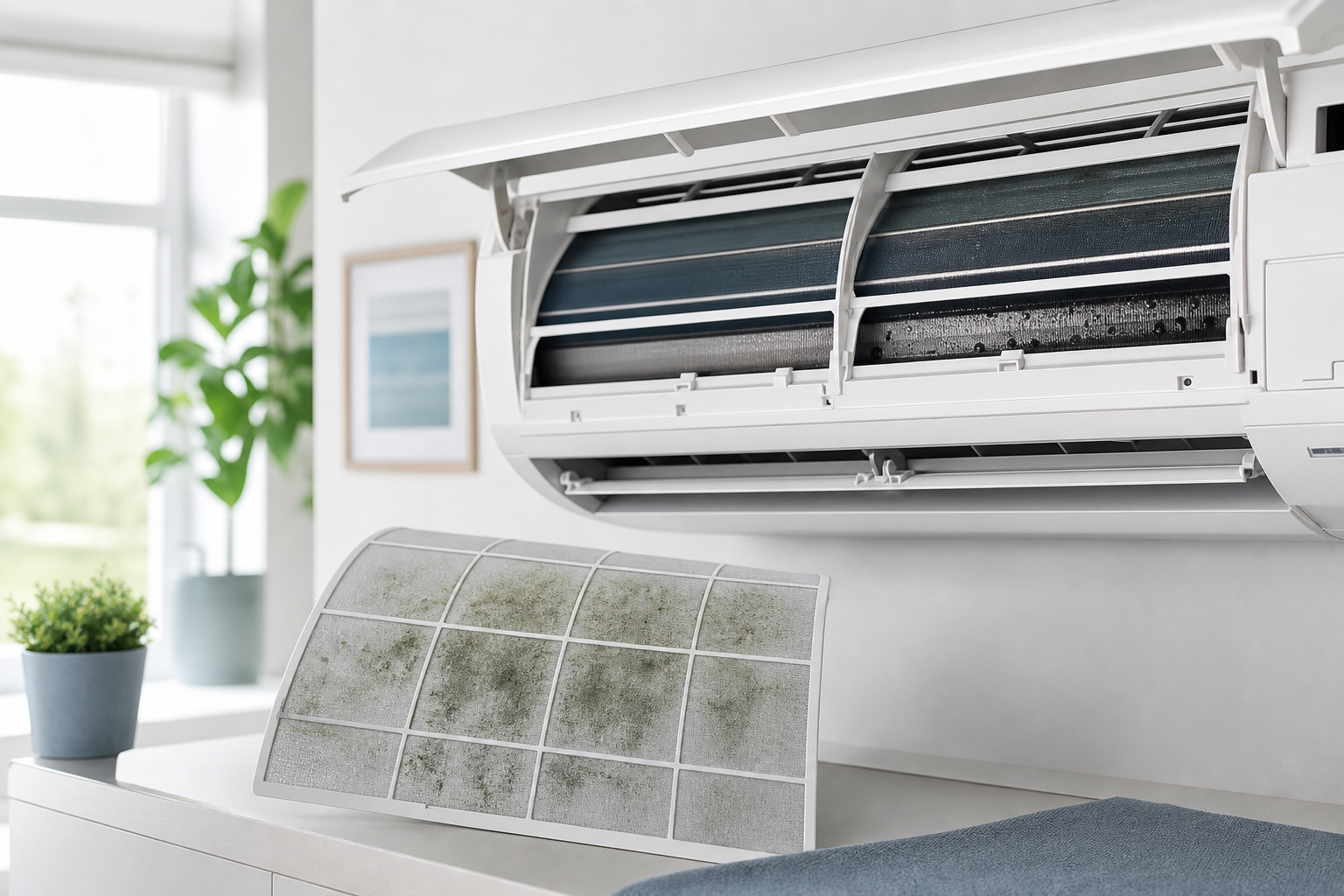
It is not always obvious whether you are dealing with dust, residue, or actual mold growth. That is why the most useful warning signs are concrete: a musty smell when the unit starts, visible spots on filters or vents, or weaker-than-usual airflow [1].
Common signs of mold in an air conditioner
A few clues can point to a possible problem:
- A persistent musty or damp odor when the system turns on.
- Dark or greenish spots on filters or visible vent surfaces.
- Irregular airflow or a unit that seems to run less efficiently.
- A noticeably less fresh indoor environment when the system is operating.
The EPA also notes that mold can grow in ducts and other parts of the system that are not easy to inspect directly, so not seeing visible spots does not rule it out [1].
What risks can it have for health and the home
Mold does more than affect how the unit looks or smells. It can also reduce indoor air quality, especially when the system spreads damp or contaminated air. The WHO links indoor dampness and mold with negative health effects and poorer indoor air quality overall [4].
Some people may be more sensitive to these conditions, and problems can become more noticeable when moisture is left unaddressed for a long time [4]. At home, ignoring the issue can also mean more buildup, more condensation, and more maintenance later.
How to inspect an air conditioner when mold is suspected
If you notice odor or unusual signs, a basic check can help you understand the situation without taking the unit apart:
- Turn the system off before touching any accessible parts.
- Check the filter for spots, stuck-on debris, or lingering dampness.
- Look at visible vents and nearby surfaces.
- If it is safe to do so, look for standing water in drain pans or signs of excessive condensation.
The EPA advises caution when the issue may be inside ducts, coils, or other hard-to-reach areas, because a visual check from the outside may not show the full extent of the problem [1].
How to remove mold from an air conditioner safely
Safe cleanup starts with avoiding actions that make the problem worse. The EPA recommends addressing visible, accessible surfaces and correcting the moisture source first when mold is suspected indoors [2].
In general, it helps to:
- Clean only visible and accessible parts.
- Avoid running the system again if the musty odor is still strong.
- Avoid forcing internal pieces apart if you are not sure how they fit.
- Check whether water is draining properly and whether condensation is forming where it should not.
When mold is inside ducts or other internal areas, home cleaning is often not enough [1][2]. In those situations, professional help is usually the most practical option.
Long-term prevention of mold in air conditioners
Prevention is usually easier than fixing the problem later. NIEHS emphasizes that controlling indoor humidity and maintaining good ventilation help reduce mold growth [3].
Useful habits include:
- Keeping up with regular maintenance.
- Cleaning or replacing the filter as recommended for your system.
- Fixing leaks or water buildup quickly.
- Reducing condensation by checking drainage and the area around the unit.
- Preventing dust and dirt from building up over time.
These steps do not make mold impossible, but they do reduce the conditions that help it spread [1][3].
When to call a professional
There are times when it is better to stop with basic cleaning and ask for expert help:
- The musty smell comes back after cleaning.
- You can see mold in ducts or hidden internal areas.
- Humidity or drainage problems keep happening.
- The system performance changes and the issue seems to spread.
The EPA notes that when mold is in hard-to-access areas or the problem keeps recurring, a professional inspection is often the safest next step [1][2].
Bottom line
Mold in an air conditioner is usually tied to moisture, condensation, and a lack of regular maintenance. Spotting the signs early, cleaning accessible parts carefully, and fixing the underlying moisture problem can help protect both the unit and indoor air quality [1][3][4]. If the odor persists or the source is inside the system, a professional review is the most sensible move.
Sources consulted
- [1] Should You Have the Air Ducts in Your Home Cleaned? — U.S. Environmental Protection Agency — https://www.epa.gov/indoor-air-quality-iaq/should-you-have-air-ducts-your-home-cleaned
- [2] Mold Cleanup in Your Home — U.S. Environmental Protection Agency — https://www.epa.gov/mold/mold-cleanup-your-home
- [3] Mold — National Institute of Environmental Health Sciences — https://www.niehs.nih.gov/health/topics/agents/mold
- [4] Health effects associated with dampness and mould - WHO Guidelines for Indoor Air Quality — World Health Organization / NCBI Bookshelf — https://www.ncbi.nlm.nih.gov/books/NBK143940/