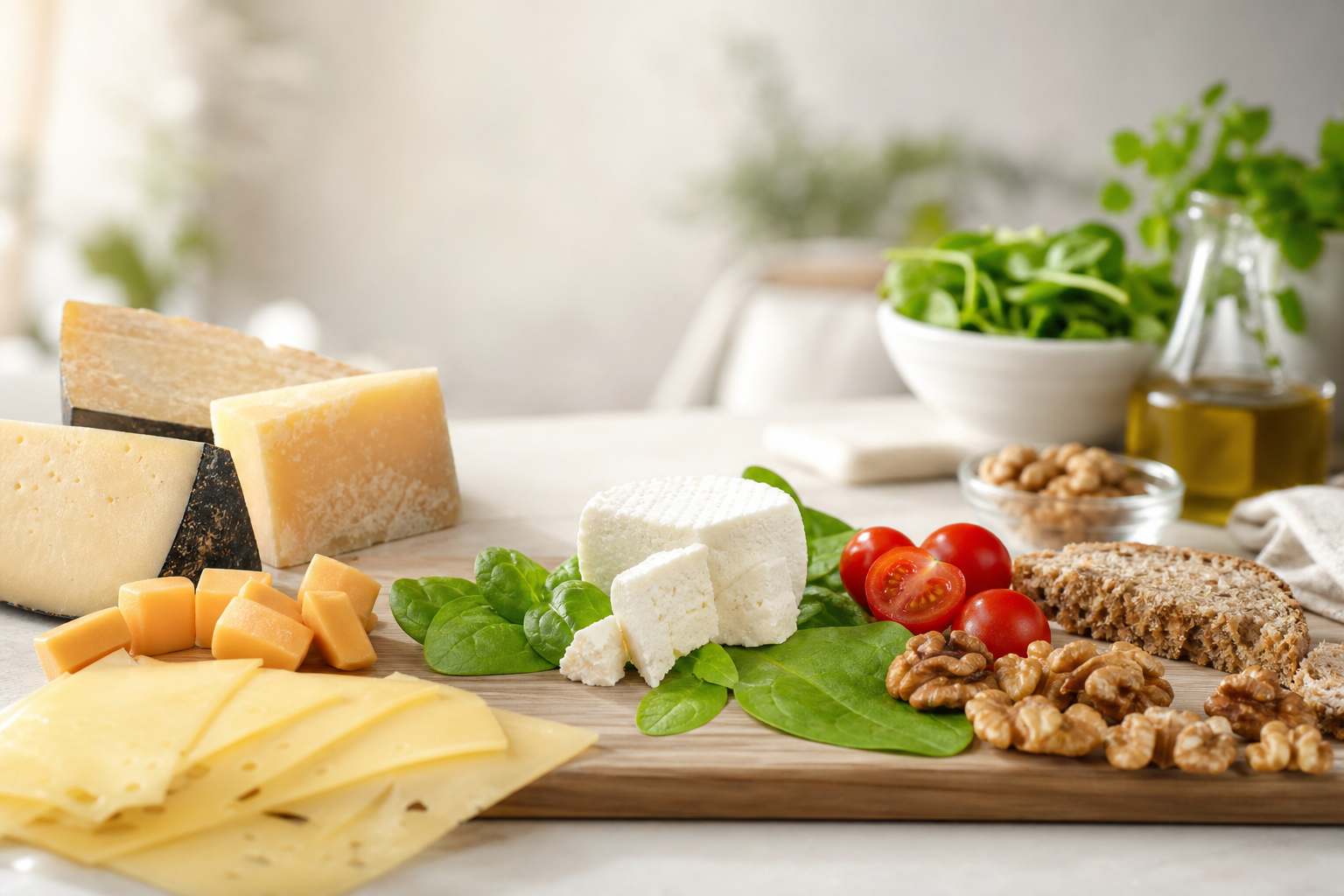
Why some cheeses are worth moderating
Cheese can absolutely fit into a balanced eating pattern, but not every variety offers the same nutritional profile. When heart health is the focus, two issues usually matter most: sodium and saturated fat. A heart-healthy eating pattern generally aims to limit both, since too much sodium can contribute to higher blood pressure and saturated fat can affect LDL cholesterol levels [1][2][3].
That does not mean cheese has to be off the menu. The key is often the amount, how often it is eaten, and the overall quality of the rest of the diet. A saltier or richer cheese may still fit occasionally, but it helps to recognize which types tend to bring more sodium or more saturated fat so they do not become everyday defaults [1][5].
What makes a cheese less heart-friendly
Some cheeses are less favorable from a cardiovascular perspective for a few common reasons:
- High sodium content: many aged, semi-aged, or processed cheeses contain a notable amount of salt.
- More saturated fat per serving: some varieties provide a meaningful amount even in small portions [3].
- More processing: certain products contain added salts or other ingredients that do not improve the overall nutritional profile.
- Easy-to-underestimate portions: cheese is flavorful, so it is common to eat more than intended.
In other words, the type of cheese matters, but so do portion size and frequency. Those factors often shape the bigger picture more than a single food on its own.
Types of cheeses that are often worth limiting
Not all cheeses affect a balanced diet in the same way, but some groups deserve closer attention if you are trying to support heart health.
Very aged or salty cheeses
Cheeses with a stronger, more concentrated flavor are often higher in sodium. That matters because excess sodium can raise blood pressure, which is an important part of cardiovascular health [2][5]. If the rest of your day already includes breads, deli meats, sauces, or salty snacks, the total can add up quickly.
Processed cheeses
Processed cheeses are often worth moderating when they show up regularly in the diet. They may have a smoother texture and can contain more sodium or added ingredients than less processed options. Reading the Nutrition Facts label can make it easier to compare products within the same category [4].
Cheeses higher in saturated fat
Some fresh and aged cheeses can deliver a substantial amount of saturated fat. MedlinePlus notes that saturated fat can raise blood cholesterol, and cheese is one food that may contribute to that intake [3]. That is why portions matter, especially if the rest of the diet is already high in saturated fat.
Cheeses eaten in large or frequent portions
Even a moderate option can become less balanced when it is used heavily or appears in several meals a day. Looking at weekly eating patterns is often more helpful than judging a single meal in isolation.
How to read the label before buying
You do not need to analyze every detail to make a smarter choice. A quick look at the label can go a long way when buying cheese [4].
Check these details
- Sodium per serving: compare brands and varieties.
- Saturated fat: see how much a realistic serving provides.
- Serving size: many labels list less than what people actually eat.
- Ingredient list: a longer list may suggest a more processed product.
This simple habit can help you spot foods higher in sodium or saturated fat without making shopping complicated. The goal is awareness, not perfection.
How cheese relates to cholesterol and blood pressure
The connection between cheese and cardiovascular health depends on the overall eating pattern. The CDC explains that too much sodium can affect blood pressure [2], and heart-healthy guidance encourages limiting excess sodium while choosing more supportive foods across the diet [1][5].
Saturated fat is also relevant when cholesterol is a concern. If intake is frequent and combined with other high-saturated-fat foods, it may become harder to keep blood lipids in a healthy range [3]. Still, one single food does not define heart health by itself. Physical activity, sleep, and the overall quality of the diet matter too.
More balanced ways to keep cheese in your meals
If you enjoy cheese, there is no need to give it up. A more practical approach is to adjust how you choose it and how you use it in meals.
- Choose lower-sodium versions when possible [4].
- Prefer lower-fat options in line with heart-healthy eating guidance [1].
- Use small portions as part of the meal rather than the main feature.
- Pair cheese with vegetables, legumes, fruit, or whole grains for better balance.
It also helps to think of cheese as an accent rather than the center of every plate. That way, it can still add flavor and texture without pushing out foods that offer more fiber and a more supportive overall profile.
Practical tips to avoid overdoing it
A few simple habits can help:
- Use a little less, but with intention.
- Rotate cheese types instead of relying only on the saltiest or richest ones.
- Pair it with fresh, fiber-rich foods.
- Pay attention to the weekly pattern, not just one day.
- If you are unsure how it fits your situation, speak with a health professional.
In short
The cheeses most worth limiting for heart health are usually those that are higher in sodium, higher in saturated fat, or more processed. That does not mean they are forbidden, but it does mean moderation and portion awareness are useful [1][2][3].
Choosing more carefully, reading labels, and paying attention to frequency are simple changes that can help you keep cheese in a varied eating pattern that is more supportive of cardiovascular health [4][5].
Sources consulted
[1] Heart-Healthy Living - Choose Heart-Healthy Foods. National Heart, Lung, and Blood Institute (NIH). https://www.nhlbi.nih.gov/health/heart-healthy-living/healthy-foods
[2] Effects of Sodium and Potassium. Centers for Disease Control and Prevention (CDC). https://www.cdc.gov/salt/sodium-potassium-health/index.html
[3] Saturated fat: MedlinePlus Medical Encyclopedia Image. MedlinePlus. https://medlineplus.gov/ency/imagepages/19998.htm
[4] Nutrition Facts Label and Your Health. Centers for Disease Control and Prevention (CDC). https://www.cdc.gov/healthy-weight-growth/healthy-eating/nutrition-label.html
[5] Preventing High Blood Pressure. Centers for Disease Control and Prevention (CDC). https://www.cdc.gov/high-blood-pressure/prevention/index.html