Dietary fiber and the gut microbiome: a practical guide
Dietary fiber is the part of plant foods the small intestine does not digest. Health organizations recommend at least 25 to 30 grams of fiber per day; most Western diets barely reach half that figure.
Soluble and insoluble fiber
Soluble fiber (found in psyllium, oats, and flaxseed) forms gels on contact with water, slows glucose absorption, and feeds gut bacteria. Insoluble fiber (brans, husks) adds stool bulk and speeds intestinal transit.
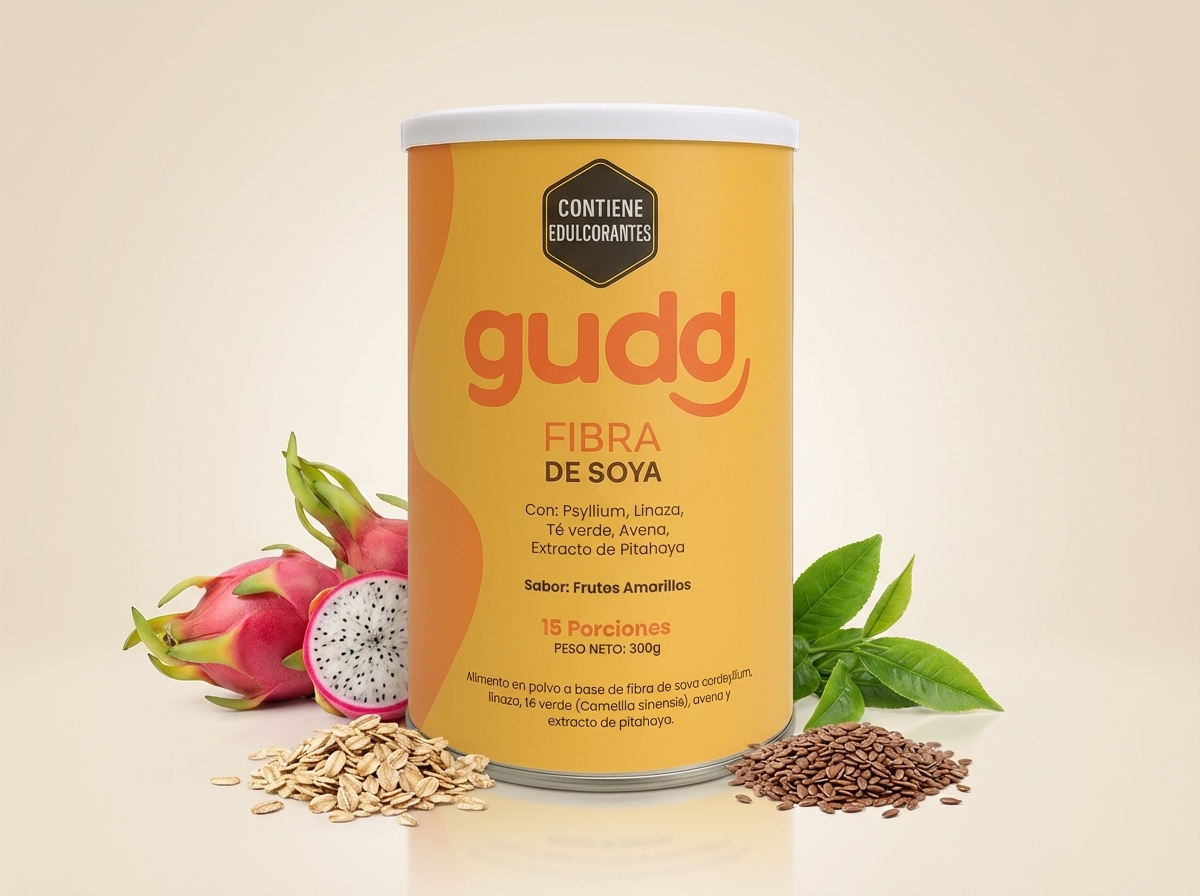
Balanced supplementation combines both. gudd Fiber, for example, combines soy fiber, psyllium, and flaxseed with FOS prebiotics, sweetened with stevia (INVIMA registration RSA-0011649-2021).
What FOS prebiotics are
Fructooligosaccharides (FOS) are fermentable soluble fibers that act as prebiotics: they selectively feed bifidobacteria and lactobacilli in the colon. Their fermentation produces short-chain fatty acids such as butyrate, the main energy source for colon cells.
How to supplement without discomfort
Fiber increases should be gradual: abrupt jumps can cause gas and bloating while the microbiome adapts. Start with half a daily serving during the first week, always drink plenty of water (soluble fiber needs it to form gels), and increase progressively to the full serving.
Frequently asked questions
How much fiber should I eat per day?
International guidelines recommend at least 25 grams daily for adults; some bodies suggest up to 30-38 g depending on age and sex. A supplement helps close the gap when diet falls short.
Does fiber interfere with medications?
Soluble fiber can delay the absorption of some medications. As a general rule, separate your fiber supplement from medications by at least 1 to 2 hours, and consult your doctor.
Which is better: fiber powder or liquid sticks?
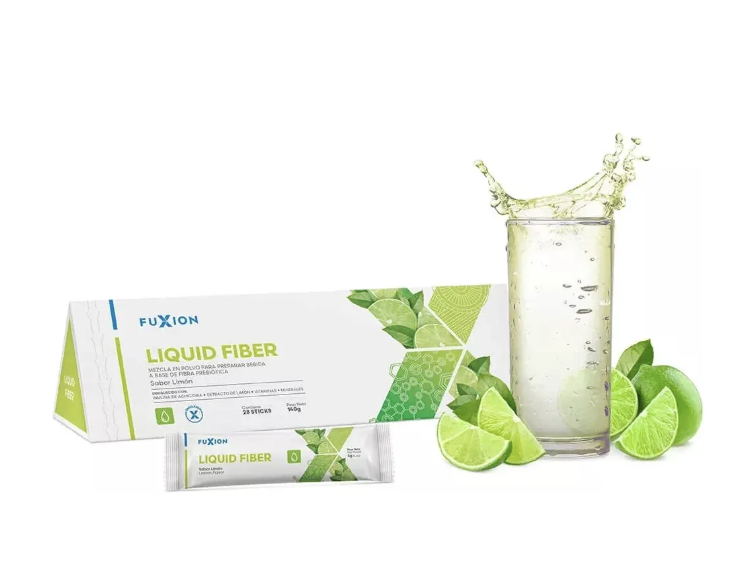
It is a matter of convenience. Powder (like gudd Fiber) lets you adjust the dose and mix into shakes; sticks (like FuXion Liquid Fiber) are practical on the go. Daily consistency matters more than format.
Related products
This content is informational and does not replace professional medical advice. Dietary supplements are not medicines and do not substitute a balanced diet.